Puppets Forsaken:
The Noisebau
September 5 to October 4, 2025
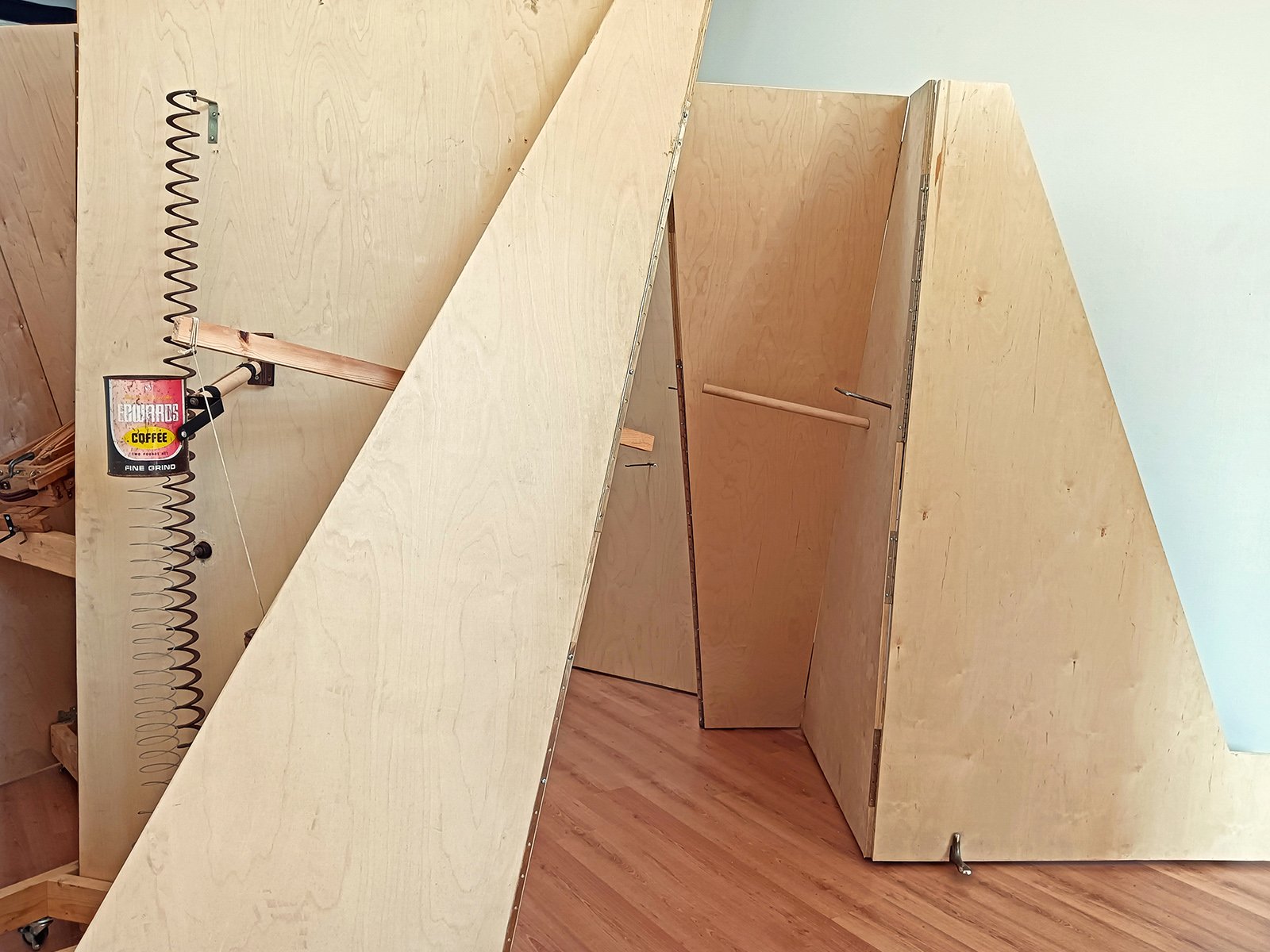
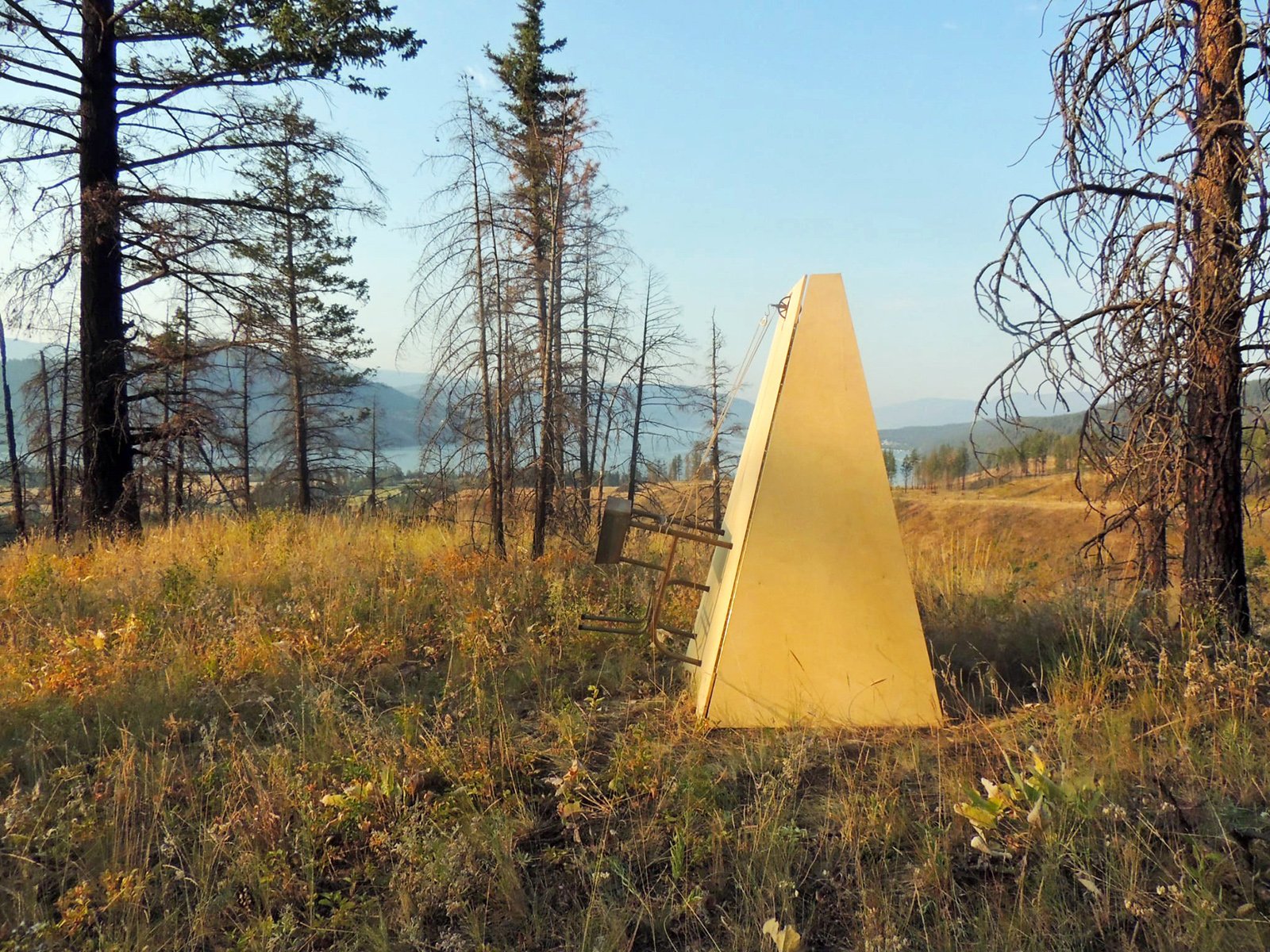
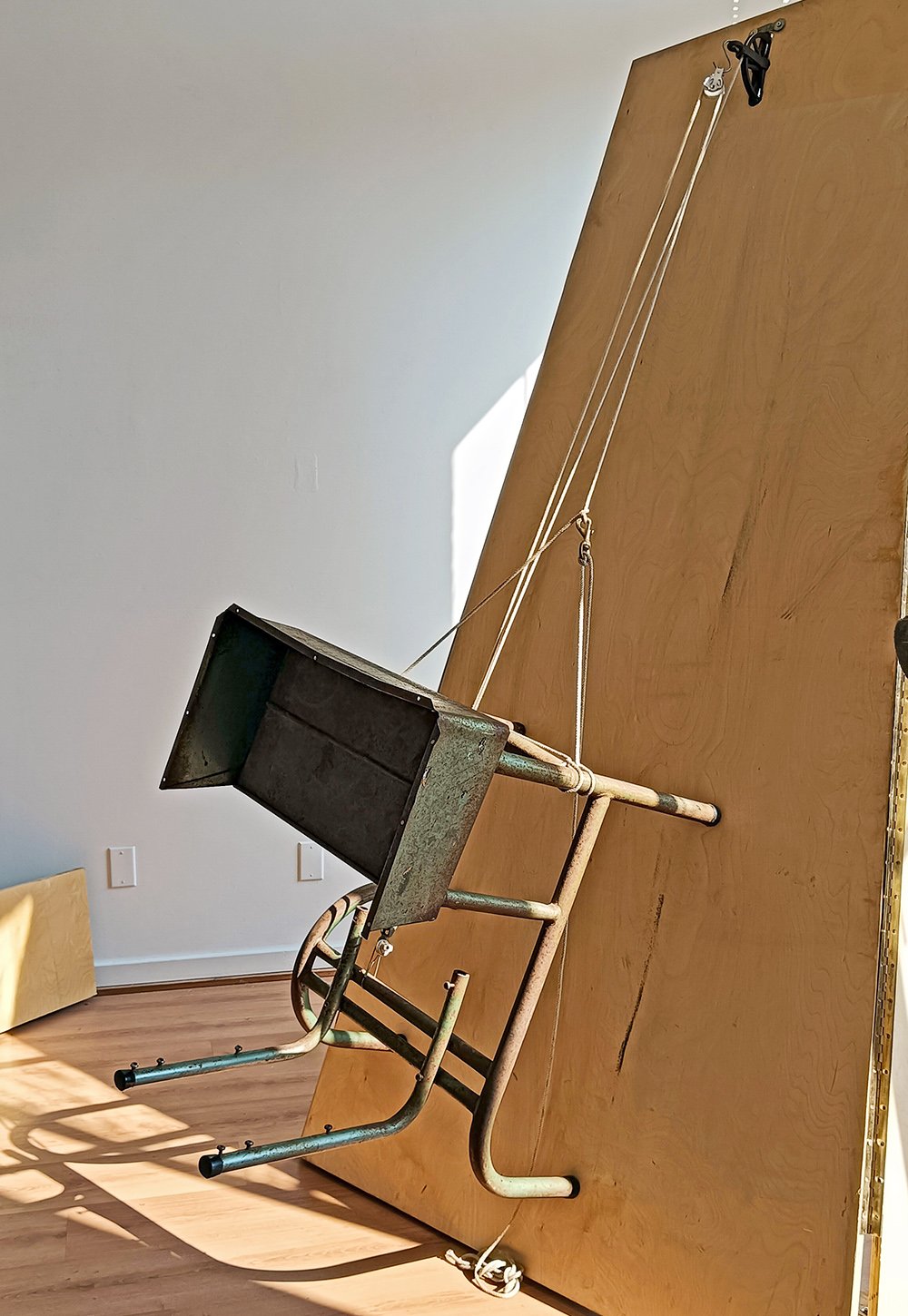
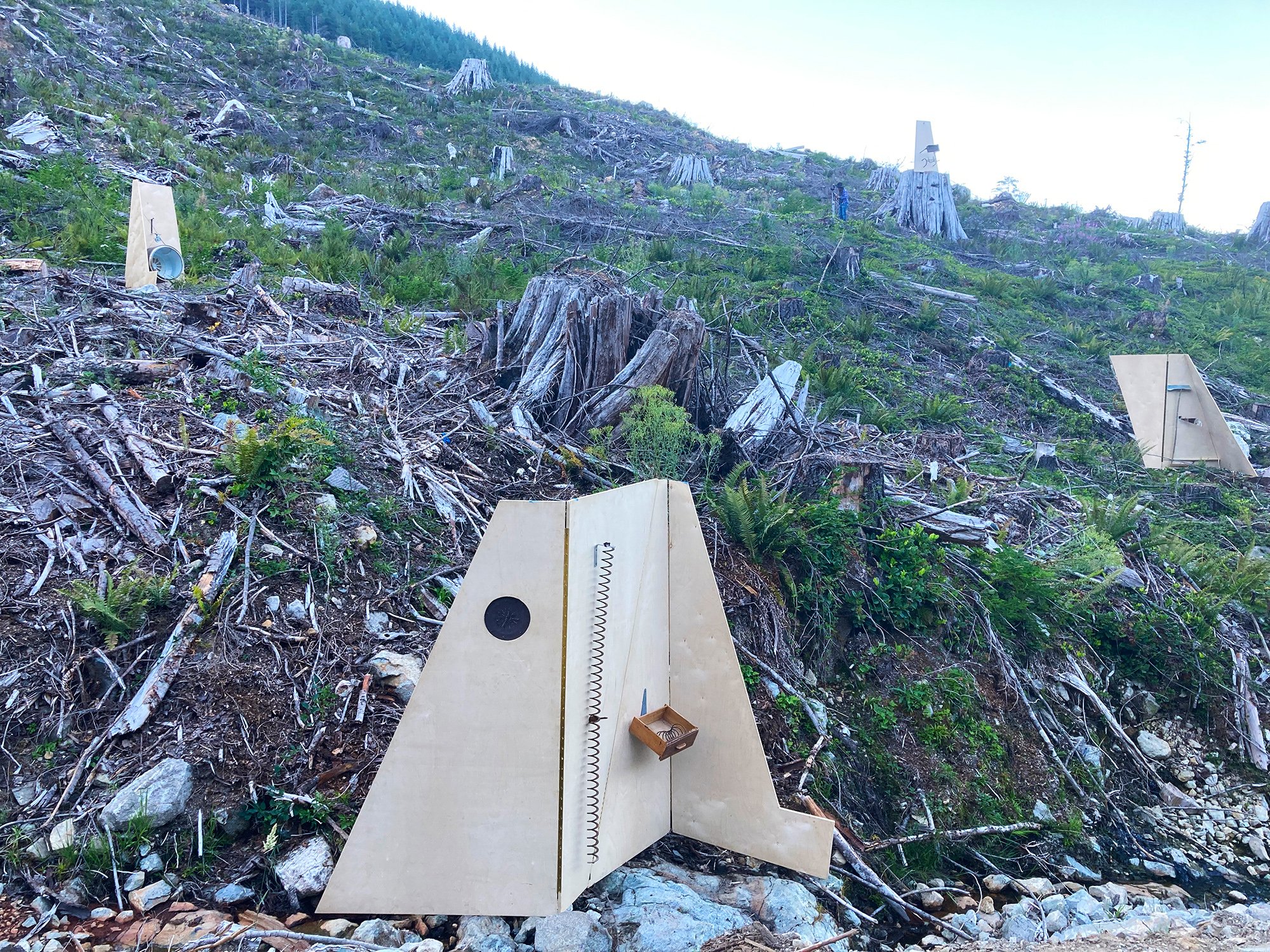
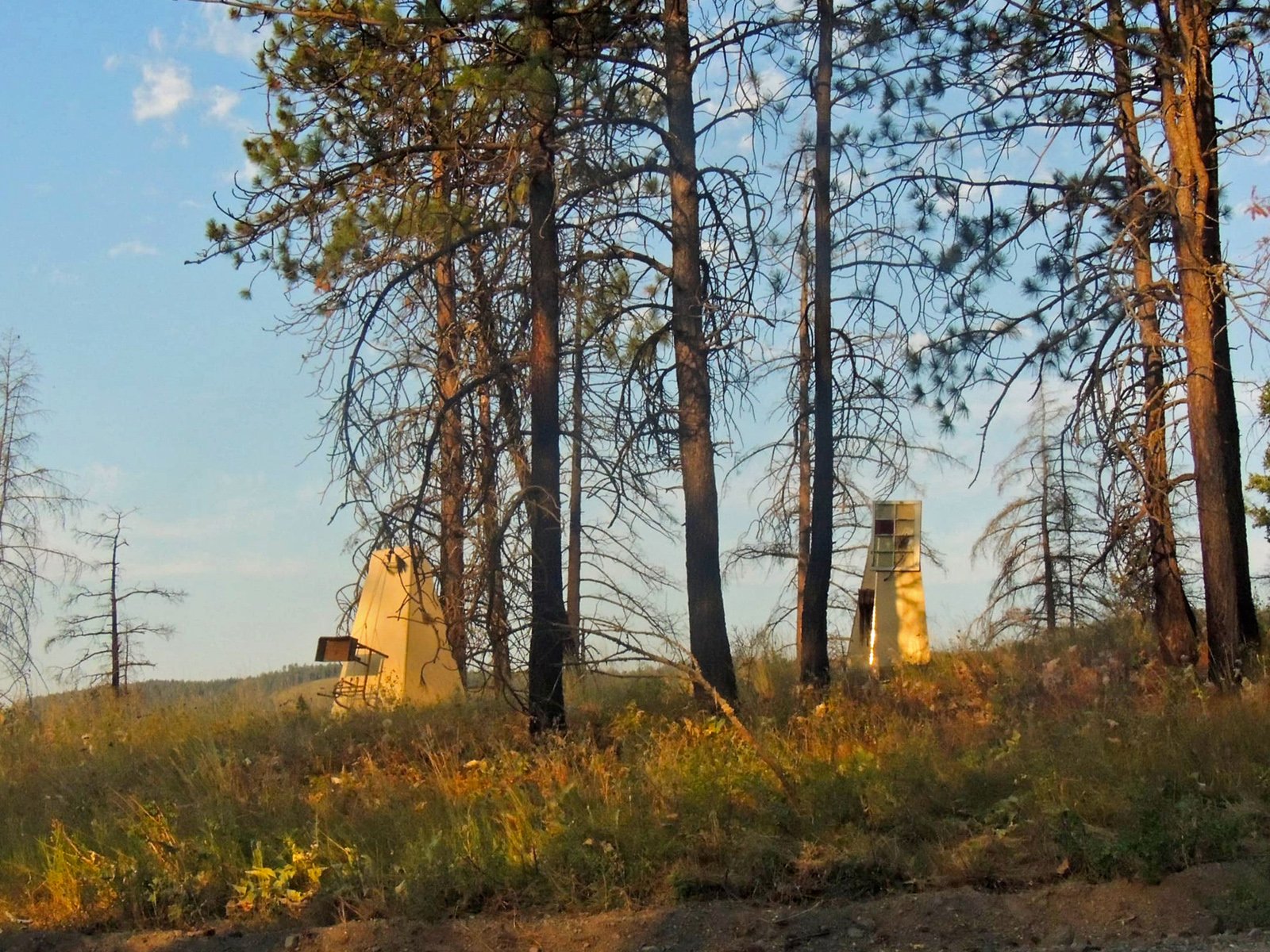
Puppets Forsaken is a sculpture/sound collaboration between Natali Leduc, David Gifford and Dean Louis, est. 2019. Originally inspired by the intonarumori of Futurist Luigi Russolo, author of the 1913 manifesto “Art of Noises,” they construct acoustic noise generators that take over rooms and involve audience members, performing for old growth trees that are no longer there, theory symposiums, live radio, recital halls and noise shows in basements.
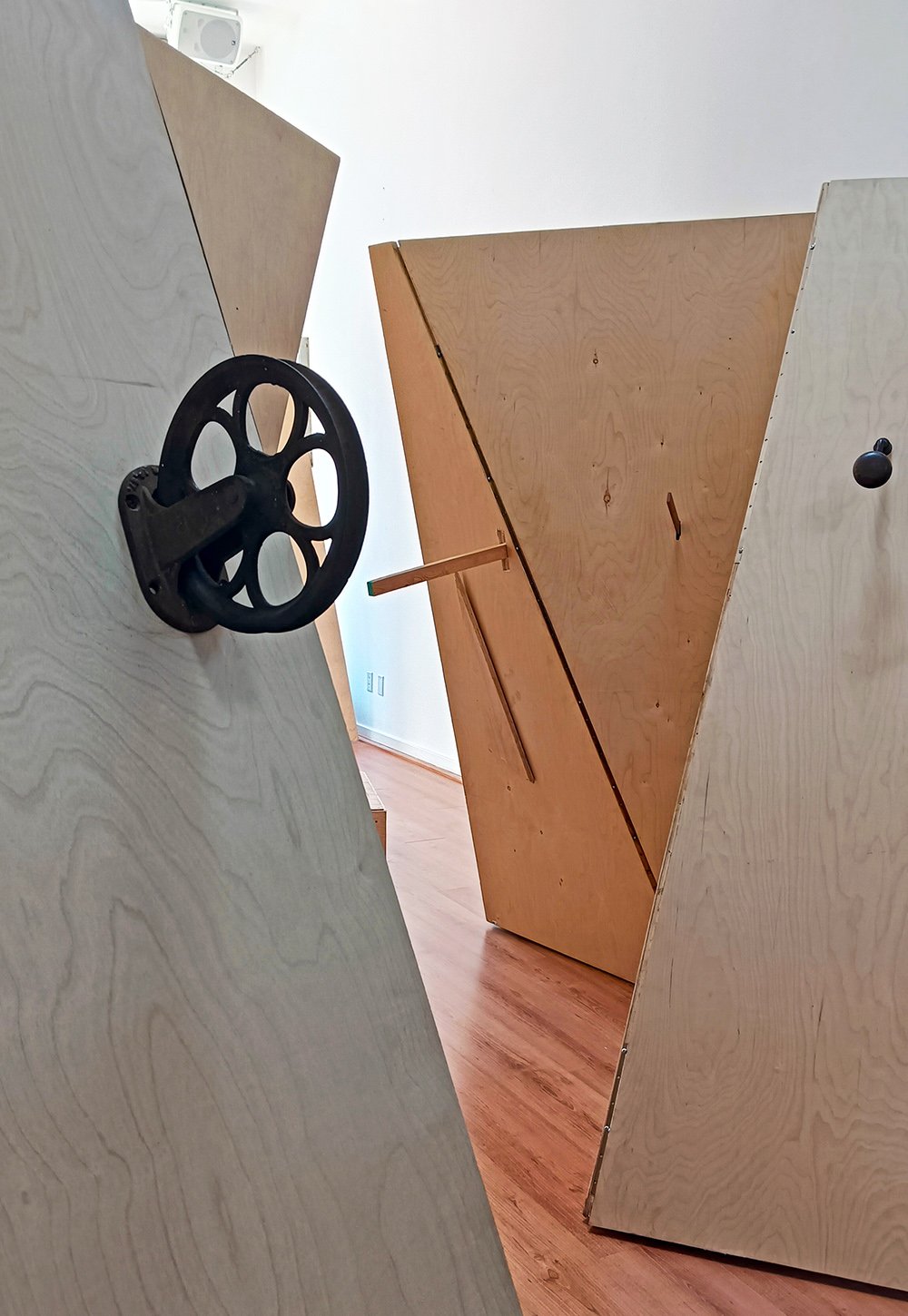
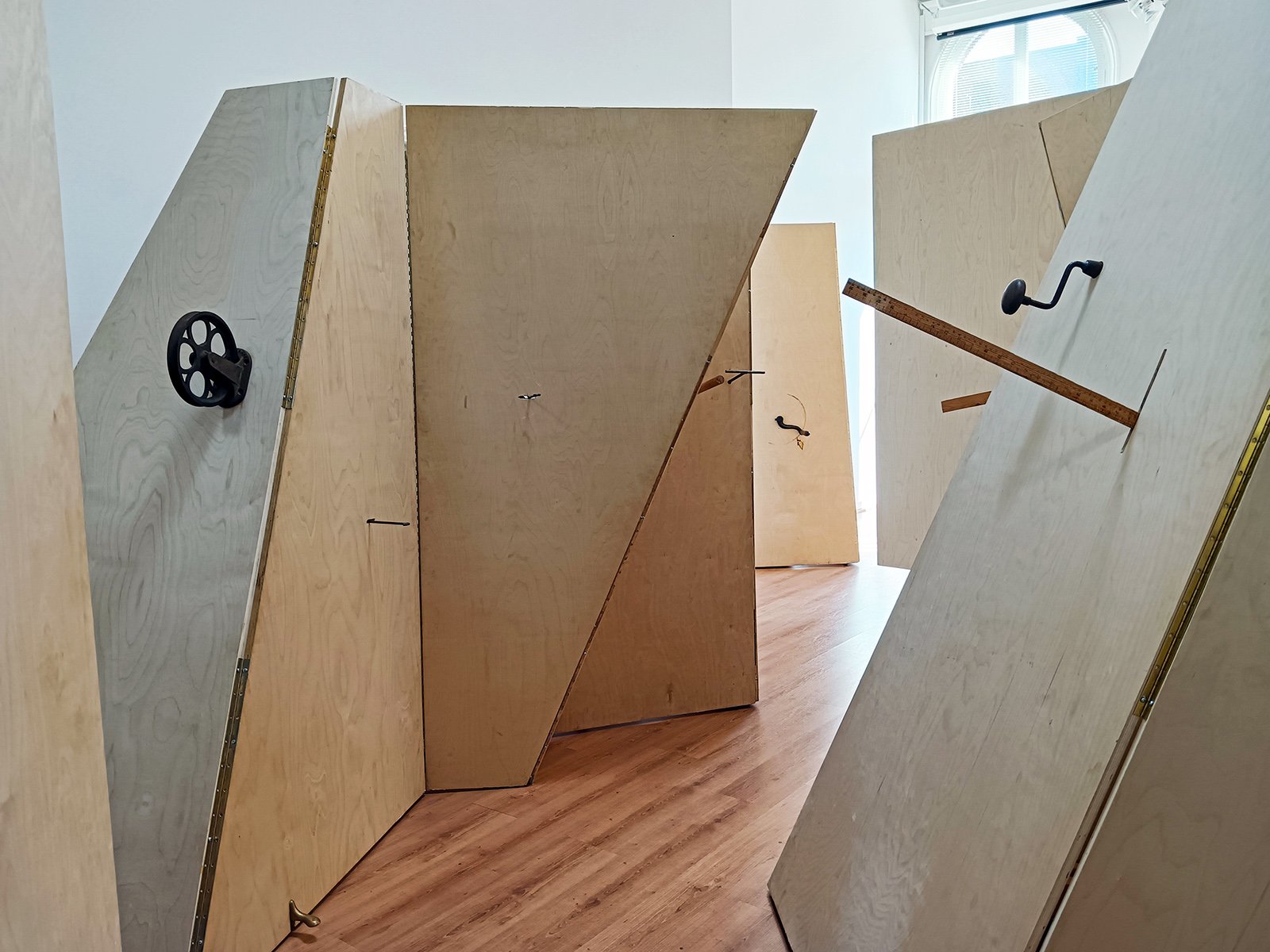
The Noisebau indulges the media of exertion in a series of modular soundscapes prefigured to optimize acousmatic conditions, where dissonance is both retro causal as well as an anticipatory abstraction for disrupting the normative.
The Noisebau, by Mark Zion
In Lars Von Trier’s Melancholia, Justine (a.k.a. “Auntie Steelbreaker”) helps young Leo to build a magic cave. Constructed on the lawn of a vast estate, the cave resembles an uncovered teepee of converging wooden sticks. Justine supervises Leo as he gathers the sticks in the forest and whittles them. Against the banal terror of his parents’ bourgeois heteronormativity, which infantilises him and interpellates him into the everyday violence of modernity, Justine inspires and guides without command. As the rogue planet Melancholia approaches and the Earth is annihilated, Justine, Leo and Claire (his mother), sit in the magic cave. What purpose could a few sticks serve at the end of the world? Perhaps this is the wrong question. The film invites us to ask what worlds ought to end in this time of capitalist intensification, the ancestral (~400-year-old) catastrophe of colonialism and the Earth’s sixth mass extinction event already long underway. Reciprocally, what form of life might be (re)activated in the interstices of the existent?
At the end, and only because of the end, before a total blackout signalling the end of the film, the end of cinema and the end of the planet, we are invited to imagine a different mode of life—to disrupt modernity’s steel certainties with a few carefully arranged sticks. Against the false promises of totalised science qua scientism and the viral stupidity of the advertising industry (both of which the film sends up), we return to lateral kinship and relationality, play and magical possibility. Aunt Steelbreaker can only summon the energy to build the cave as the world ends; Melancholia’s approach inverts her melancholia within the accustomed ruins of the objectively melancholic social order. Art must sometimes go to great lengths to loosen the ironclad axioms of a historically specific “common sense.” The film is not about the end of the planet. It is about how to (re)world in catastrophic times, beginning again. Kids tend to be more leonine with this task.
This installation dodges the logic of utility, so ubiquitous in today’s ever-more-entrepreneurialised “adult world.” Instead, we reprise a child’s love of play and exploration. It is an attempt—beyond success-failure—to inhabit a world of possibility and to invite those who play with the levers, pulleys and other interfaces to help (re)generate it. Participants of all ages invariably smile and express wonder while navigating the sculptural multiplicity undergirded by the vaulting form. We are recalled to the most elemental possibilities afforded by wood and geometry.
Vaults sequester and hide, but this is one we can access, entering a space of noisy co-composition. Much may be revealed. “May” evokes a space of possibility between “is” and “ought.” Walking among the postmodern pyramids, we discover an anti-Luxor of sight, sound and touch (we advise against tasting). If noise is human and music is divine, what does the middle register evoke? Rusty hinges squeal, old desks whine falteringly as they climb strange perpendiculars, seesaws draw us into metronomic tip-tapping and a wave pool whirls and whirs. Now is surely the time for a soundscape of prefigurative reforestation. Into what orthogonal relationality may we vault?
Love today is often transactionalised or channeled into familial “partnerships.” But Eros may be reappropriated for loving oddkin, with sound experimentation. The magic cave regathers. Would wood whirl worlds?
The project gratefully acknowledges support from the Canada Council for the Arts and British Columbia Arts Council.
