Repeat as Necessary
April 10 to May 8, 2026
An online exhibition of artists’ moving image works.
Martín Dávalos, McLean Fahnestock, Brice Goldberg, Aleksandra Kolodziejczyk & Karl Wratschko, Matthew Lancit, Dave Mawer, Mike Andrew McLean, Kate Pelling, Jonathan Seungjoon Lee & Yun-hee Huh, Dina Yanni
“Insanity is doing the same thing over and over and expecting different results.” This quote, usually misattributed, has been overused to the point of cliché. What if repetition is the end, not the means?
Reproducibility is a cornerstone of the scientific method, which is still the basis for rationality in most parts of the world. The cyclical process that validates a hypothesis is also fundamental to experimental forms of artistic production, from music and literature to visual and media art.
More so than graphic or plastic arts, a time-based form like motion pictures depends on repetition, its frames-per-second heartbeat constructing illusory motion from a sequence of static images. While the physiological theory of "persistence of vision" has been debunked, the term remains an apt descriptor for the sequential, recurrent expression inherent to experimental media. We repeat to learn, to perfect. Not just by rote, but through trial and error. Beckett's maxim [Try again. Fail again. Fail better.] was not a motivational slogan, but a declaration of artistic method.
Repetition is, on one hand, the current tenor of everyday life—of mass and social media, entertainment, advertising and communications. On the other, it is the ethos of spiritual practices and paths to enlightenment. It is simultaneously the zeitgeist of alienated labour under late-stage capitalism and the cyclical foundation of the natural world and physical universe. Repetition is also central to both humour and satire, from the absurdity of endless clowns emerging from a tiny car, to the critique of endless clowns dooming us all by repeating history.
Repeat as Necessary presents short artists’ film and video that engage with these concepts of repetition, whether through process, form and/or content; works that revel in doing the same the same thing over and over with no defined expectation of results.
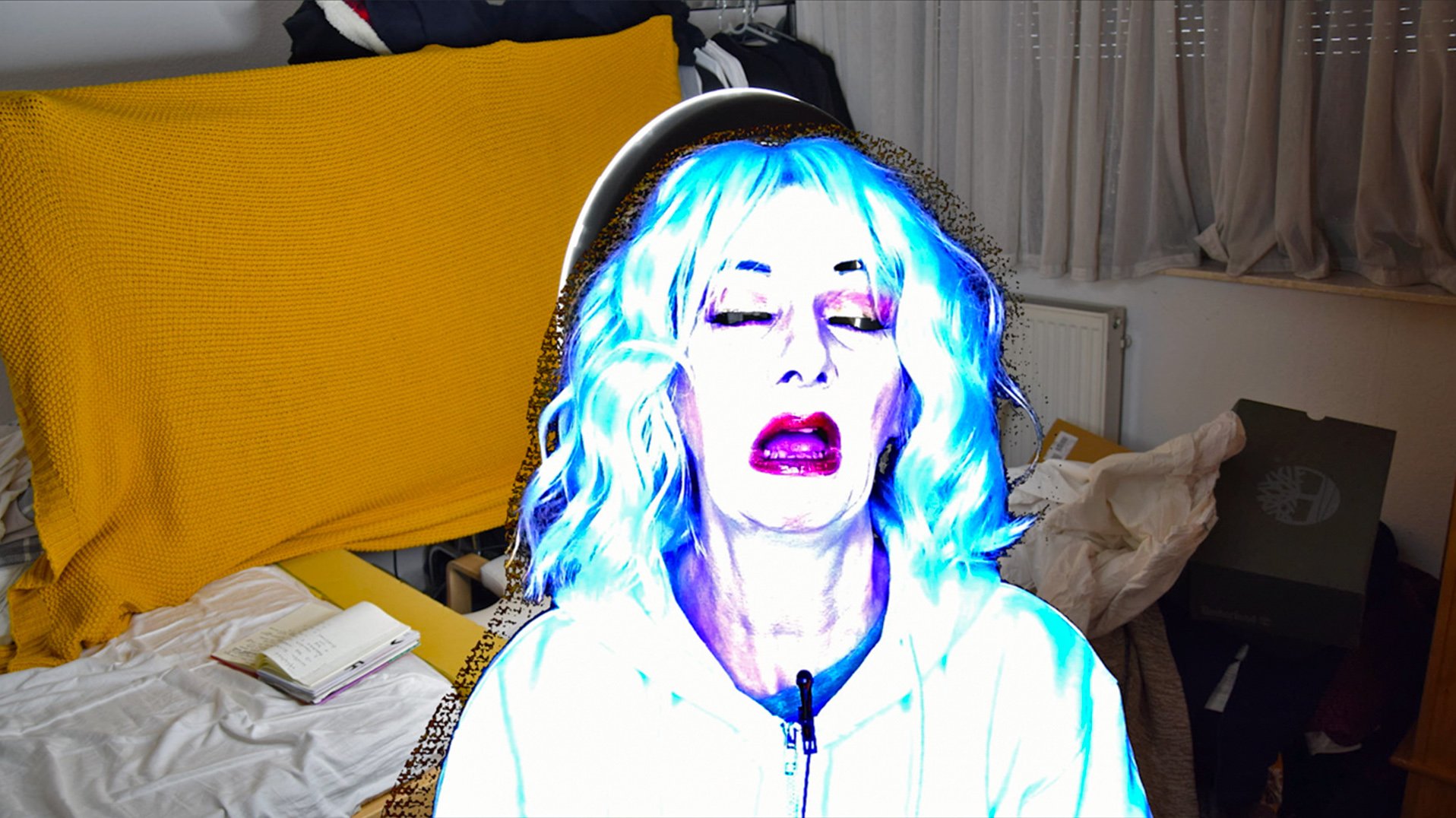
is it experimental? number 3
Kate Pelling
2026, Germany, 1 min
is it experimental? number 3 uses repetition and photographs of the artist’s chaotic and cramped production environment to expose the working conditions that plague experimental filmmakers without access to a professional studio or equipment. The repeated phrase “I can’t work like this” is true, in that the lack of time and resources can indeed limit creativity, but also tongue in cheek, as Pelling and many other artists in a similar position continue to produce important and relevant film and video works under these constraints.
Kate Pelling is a German artist originally from the UK. Although her practice includes drawing, video and publication, she is best known for direct address to camera works that expand the language of editing processes in artists’ video and explore ideas around the successes and failures of different communities—as an immigrant in Germany and as a working class artist. Pelling studied at Wirral Metropolitan College, Birkenhead, Wimbledon School of Art, London, and Birkbeck, University of London. In 2016, she completed her PhD at Chelsea College of Arts, University of the Arts London, titled Select Reject Reconfigure: Editing Speech in Artists' Direct Address to Camera.
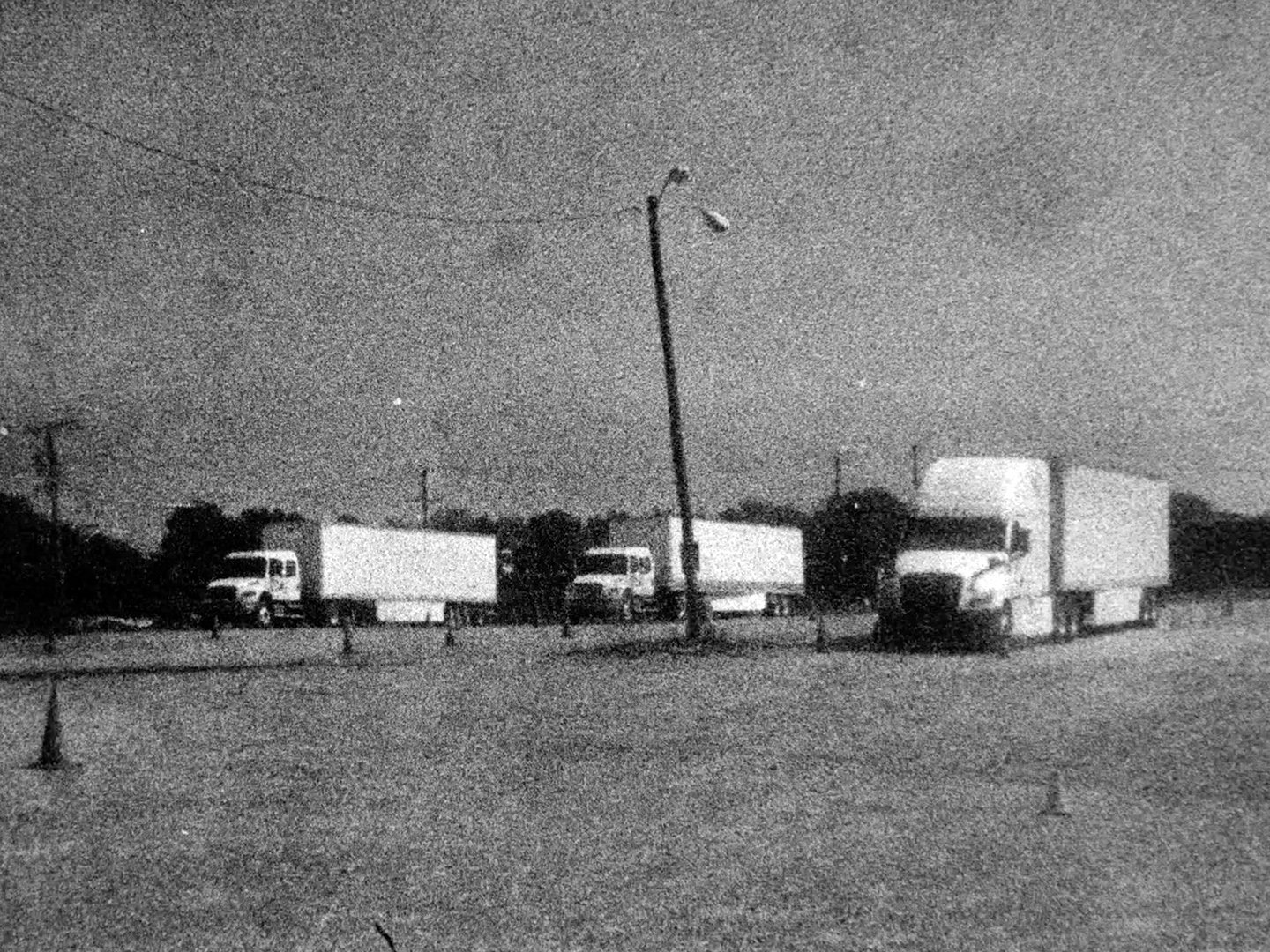
One Hundred White Trucks
Brice Goldberg
2024, USA, 4 min, silent
One Hundred White Trucks is an exploration in structural methodology and analogue filmmaking techniques. It was photographed with a Bolex H16 Reflex camera over the course of two days with two 100 foot black and white 16mm rolls. The film was then hand processed and scanned to digital. What began as an obsession with a singular subject revealed timely symbolism of the late stage capitalism American landscape.
Brice Goldberg is a filmmaker, photographer and musician born in Philadelphia. He practices both documentary and experimental filmmaking, examining the lives of unique individuals and creating analog meditations on landscape, texture and form. He is currently pursuing his MFA at VCUarts in Richmond, VA.
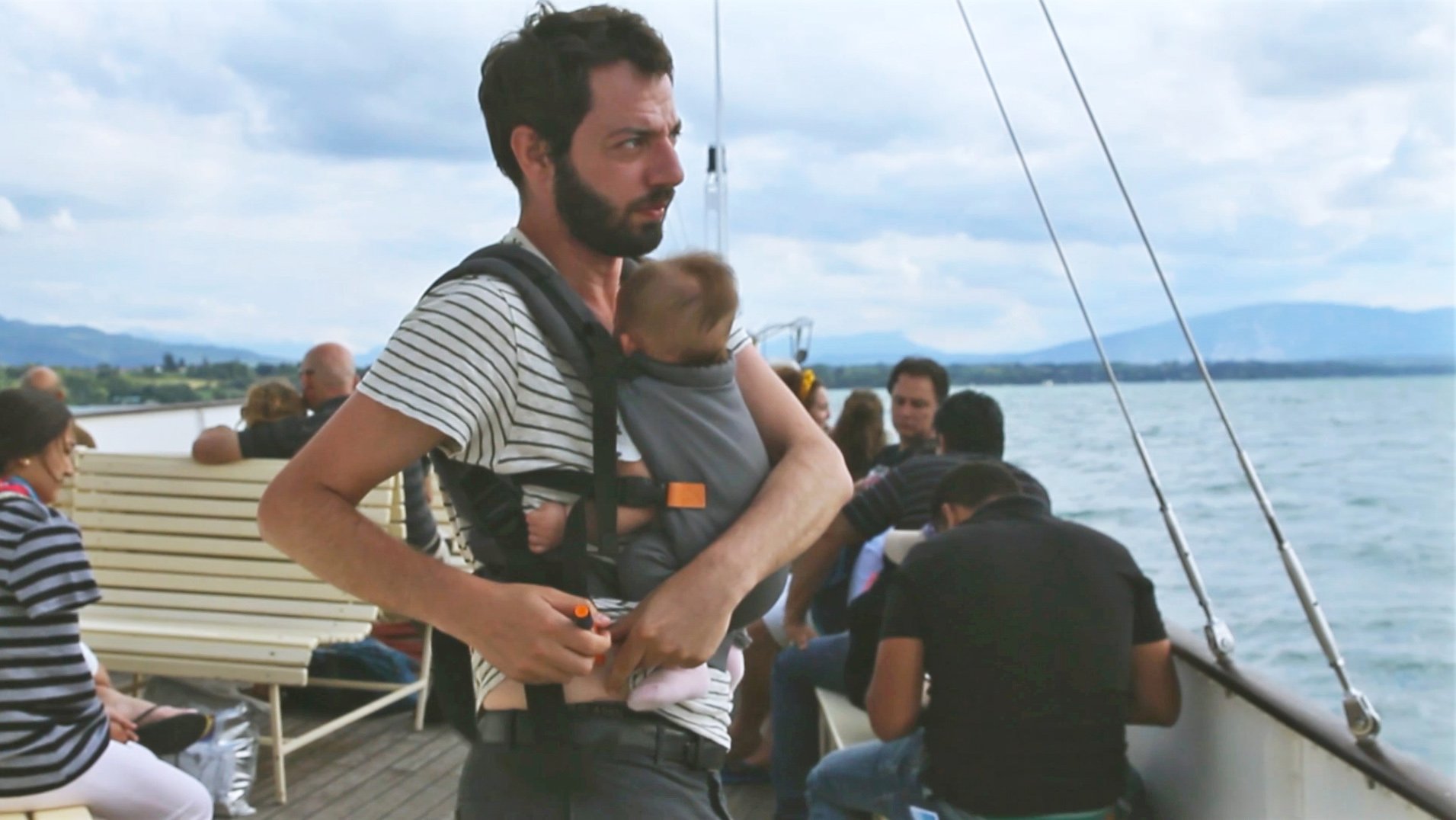
Stomach, Thighs, and Ass
Matthew Lancit
2025, Canada/France, 6 min
Stomach, thighs and ass refers to the various sites of the body where I can inject myself with insulin. Every night and every morning, and before every meal, I check my blood sugar level, record it in a notebook and take my insulin. For two years, I have kept a video diary of every single insulin injection. This four-channel video is made up of a selection of those needles, sometimes in the intimacy of my domestic space, sometimes in public, up close and far away, moments of anxiety and moments of calm, these documented injections capture brief glimpses of the fleeting life that surrounds them. In the process, the viewer pays witness to both the exhaustion of living with chronic illness and the quiet stillness that can sometimes accompany it.
Somewhere between performance art and ethnography, the intimate and the burlesque, plasticity and the phantasmagorical, the films of Matthew Lancit merge and break apart traditional categorization. They have won accolades at festivals around the world, and have been invited to various museums and galleries. His first feature (Funeral Season) was chosen for preservation by the Library and Archives of Canada, and his second (Play Dead!) was broadcast on ARTE – La Lucarne.
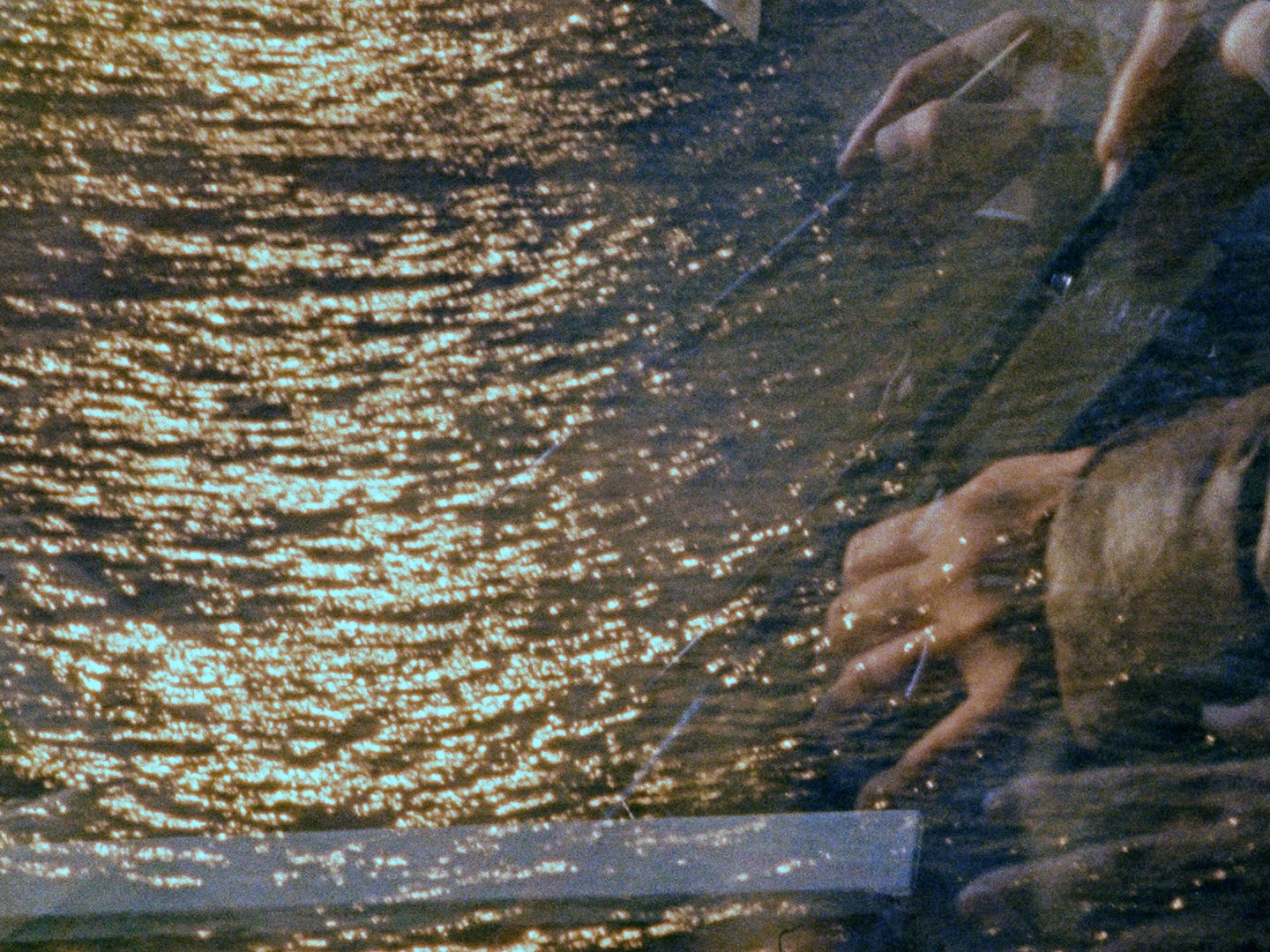
K (a la manera de una camelina)
[K (in the manner of a camellia)]
Martín Dávalos
2026, Mexico, 3 min, silent
In Uruapan’s central plaza, a centuries-old, withered tree refuses to die beneath the canopy of a camellia that mysteriously reached its summit.
Martin Dávalos’ research and filmmaking practice explores experimental cinema, the reappropriation of film archives and the use of the word—both filmed and written—through works created under the ontological principles of the moving image: light and darkness. Dávalos works in Super 8, weaving a connection between body and object: the camera and what it reveals as a diary of his own existence.
As a researcher, he has completed a thesis on the Michoacán filmmaker Teo Hernández, who went into self-imposed exile in France, and his autobiographical trilogy: Tres gotas de mezcal en una copa de champán, Fragmentos del ángel and Vitriol. Dávalos is currently working independently on a research project about the unfinished film shot in Mexico by David Wojnarowicz, A Fire in My Belly. His films have been screened at various exhibitions and festivals dedicated to experimental cinema, including Muta (Perú), Museo de Arte Moderno, Centro de Cultura Digital, Cineteca Nacional, Cátedra Bergman, Fisura, Tabakalera Centro Internacional de Cultura Contemporánea – Eliaz Querejeta Zine Eskola, Spectacle Theater, Images Festival, Laboratorio Cine FAC, San Martín Cultural Center, Arab Center for the Image and Deluge Contemporary Art.
one hundred doors closing
Mike Andrew McLean
2026, Canada, 16 min
one hundred doors closing is a durational aural/video artwork contemplating the limits of potentiality, and the acknowledgement of both physical and mental decline associated with aging. Through repetition of form, doors builds out a network of isolated and immersive audiophonic recordings that are at the same time both strange and familiar, offering a collection of sonic snap-shots reflecting on the everyday sublime. Intentional listening with quality headphones is encouraged.
Mike Andrew McLean is a photographic artist and educator working and living on the west coast of Vancouver Island, Canada within the traditional territories of the lək̓ʷəŋən People. His image-based works have been shown both nationally and internationally and have been acquired by private collectors and public institutions. His current and historical projects can be found on his website.
Präsenz [Presence]
Aleksandra Kolodziejczyk & Karl Wratschko
2020, Austria, 6 min, silent
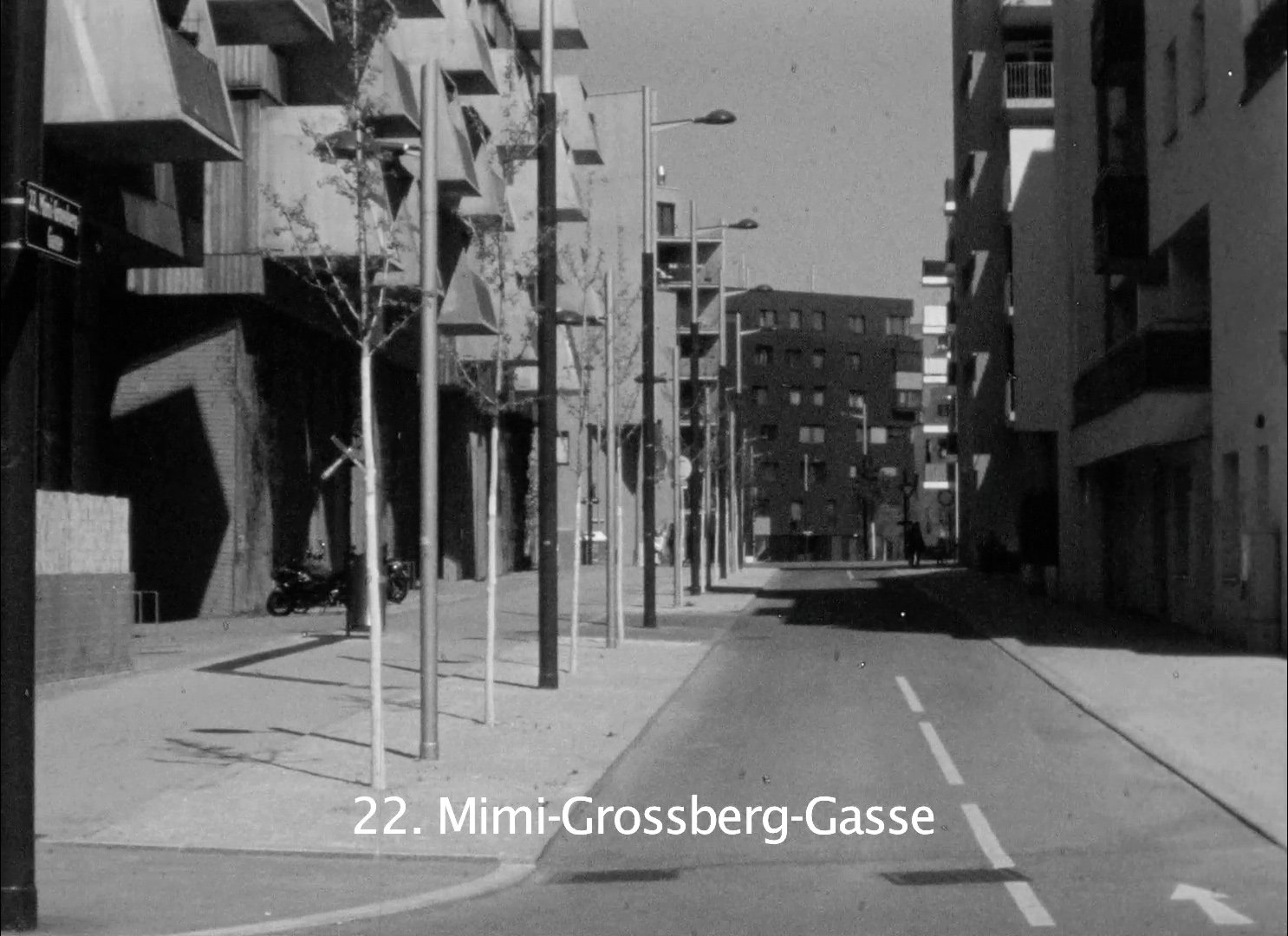
In most cities, women are severely underrepresented in the urban landscape—a far cry from gender parity. In Vienna, about 90% of all places and streets named after people bear the names of men. Präsenz brings Viennese locations named after women into view and closer to the awareness of the viewer. Similarly to what happens in our perception while we traverse public space, the 397 areas bearing women’s names flash up on the screen one at a time, a single shot dedicated to each. The countdown effect in these shots, which begin at the periphery and move towards the city centre, draws attention to the significance and distribution of places named after women. Präsenz is a kind of inventory, a contribution to an active culture of remembrance and gender equality as well as a critical examination of the representation of women in public space, which can also symbolically stand for other areas of society and reflect the reality of other cities.
Aleksandra Kolodziejczyk works with analogue photo and film material. Her work reflects her interest in socio-political issues, focusing on questions of justice, representation and people’s relationship to their environment. She is a graduate of the Friedl Kubelka School for Artistic Photography (2024/2025).
Karl Wratschko is a curator, filmmaker and artist. His work includes film, photography, installation, radio and public art. In his practice he is particularly interested in socio-political issues, collective memory, media change and the interaction between humans and nature. Since 2016, he has been working as a film curator for the festival Il Cinema Ritrovato in Bologna and as a curator for museum exhibitions. His programmatic and editorial work focuses on early film, silent film, experimental film, ephemeral film and experimental music.
Dominion
McLean Fahnestock
2024, USA, 2 min
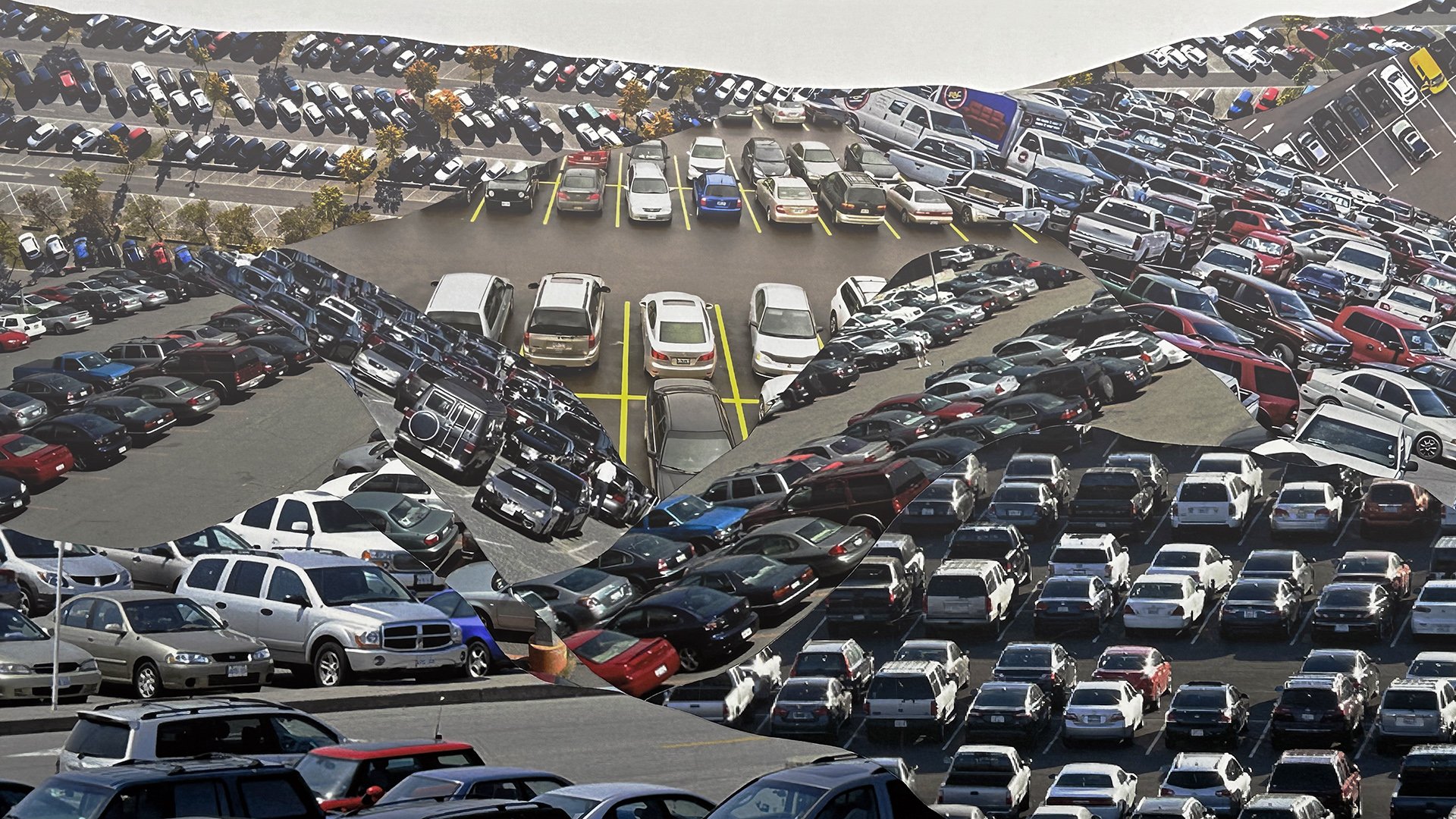
Repeated bombing runs produce a unique type of destruction upon a landscape. Gold leafed munitions—promises of wealth and prosperity—burst upon the hills and coat them in developments: suburban housing tracts, parking lots and strip malls erupt in the wake of golden plumes of smoke. After they have run out of land to lay waste to, the bombers begin to attack each other, the violence of convenience and expansion turning upon itself.
McLean Fahnestock is a Nashville-based interdisciplinary artist who works with desire in the manufactured landscape and its violent consequences. The grandchild of an explorer, Fahnestock questions how desire shapes our relationship with the land, manipulates our perception and judgement and manifests in conflict, violence and ownership. Her practice is primarily in video and other forms of new and digital media, animation, installation and sculpture, most often engaging in appropriation and collage strategies integrating forms of digital capture, presentation and creation with embodied layering and sculptural containers for media.
Fahnestock received a MFA from California State University Long Beach. Her work has been exhibited and screened across the United States and Internationally at institutions such as the Aurora Picture Show and Menil Collection, Frist Art Museum, Black Mountain College Re{Happening}, Technisches Museum Wien, The California Science Museum, The British Library, MOCA Hiroshima and Off the Screen at Ann Arbor Film Festival. Her work has been supported by grants from the Puffin Foundation, Hoff Foundation, Durfee Foundation, South Arts and Current Art Fund, a regional regranting program of the Warhol Foundation. She has been an artist in residence at Cerritos College, Vanderbilt University, The School of Making Thinking, Stove Works, Mineral House and The Lock-Up.
Arrangements for Robotic Arm
Dave Mawer
2023–25, USA, 5 min, silent
Arrangements for Robotic Arm is a series of looping animations composed through repeated acts of computational output, robot-actuated drawing and sequencing. Each segment resolves seamlessly into itself and creates a perfect loop without a fixed beginning or end. Here, repetition functions as both process and subject: every animation begins as a software program whose code is written to run a motion sequence before being brought back to a “zero frame” which enables both the software program and its visual output to repeat in perpetuity. The series approaches repetition as a condition which unfolds in time. Meaning emerges through this consistent and sustained return to an initial form before starting once more.
Dave Mawer is a media artist and Assistant Professor of Art and Design at Buffalo State University, Buffalo, New York. His work explores bridges between digital and analogue arts, and the ways that computation can be used as a medium for poetic expression. Through computation-derived generative systems, drawing, animation and print-based processes, he investigates visual repetition, variation and emergence as both aesthetic and conceptual concerns.
Sounds of a Factory: WAV to PNG
Dina Yanni
2026, Austria, 7 min
Sounds of a Factory: WAV to PNG translates factory recordings sampled from Youtube into visual noise patterns using scripting and databending techniques. Sound is segmented into micro-temporal units and algorithmically reinterpreted as grayscale pixel values. Rather than representing industrial labor, the work reenacts its operational logic: repetition, synchronization and normalization. The pulsating grain and the looping structure situate the viewer inside a rhythmic system in which perception itself becomes a site of power.
Dina Farida Zahia Yanni is an Austrian-Egyptian video artist and researcher. Her work is heavily influenced by popular culture, theories of postcolonialism, cultural studies and poststructuralism. Dina creates video works that use existing footage, experimental editing and data corruption to reveal, reevaluate and reframe power structures embedded in the original materials. She also publishes theory-based work on these same themes. Yanni holds a PhD in Political Science and a Master’s degree in Film Production. Her work has been exhibited at galleries, experimental film and video art festivals internationally.
빛을 향한 수행 [Practice Towards Light]
Jonathan Seungjoon Lee & Yun-hee Huh
2025, Korea, 12 min, silent
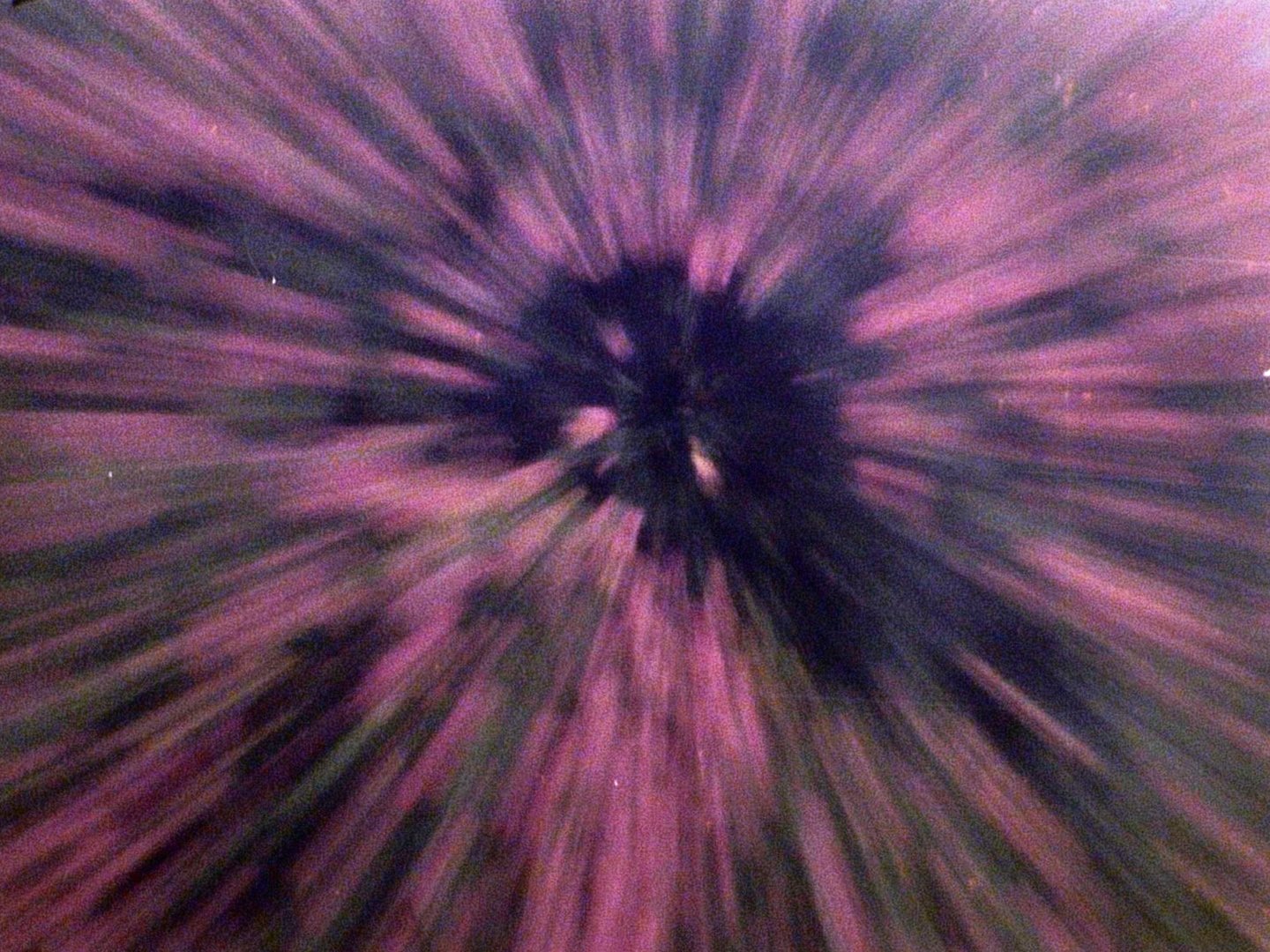
In collaboration with painter Yun-hee Huh, this work documents a year-long practice of filming the sunrise through multiple exposures on four 100ft rolls of 16mm film. Each of the four rolls represents a season (fall, winter, spring, summer) with seven separate sunrise shoots layered onto a single roll of film, creating a compressed record of time and light.
Jonathan Seungjoon Lee is a Korean-American video artist and filmmaker working with themes of family, diaspora and ecology.
Yun-hee Huh has built a distinctive artistic practice that interweaves existential reflection with ecological sensibility, exploring the origins of human existence and the cyclical rhythms of nature. Using charcoal made from burnt wood as her primary medium, she extends the act of drawing and erasure into a meditative process—transforming the traces of life into gestures of painting and performance. During her years in Germany, the isolation of living in a foreign land and the rupture of communication caused by language became formative experiences that led Huh to question the essence of human existence and the finitude of life. From this period emerged her monumental charcoal wall drawings—works that transform bodily movement and the flow of time into layered surfaces, serving as both a meditative act and a record of being. Since returning to Korea, she has broadened her gaze toward nature and life, reflecting on the ecological realities of our time—disaster, environmental destruction and the threat of extinction. She observes the everyday and traces the rhythms of natural time through diary-like series, carrying her art forward as a meditative practice inseparable from life itself. Her art contemplates the relationship between being and nature at the threshold between the transient and the eternal, illuminating the essence of life that reawakens amid disappearance. Yun-hee Huh has exhibited extensively throughout Korea and internationally. She is the recipient of the 2024 LEEINSUNG Art Prize.